
How Neurofeedback Training Shapes Financial Decision-Making
USPTO patent-pending
Our Research
Study Overview
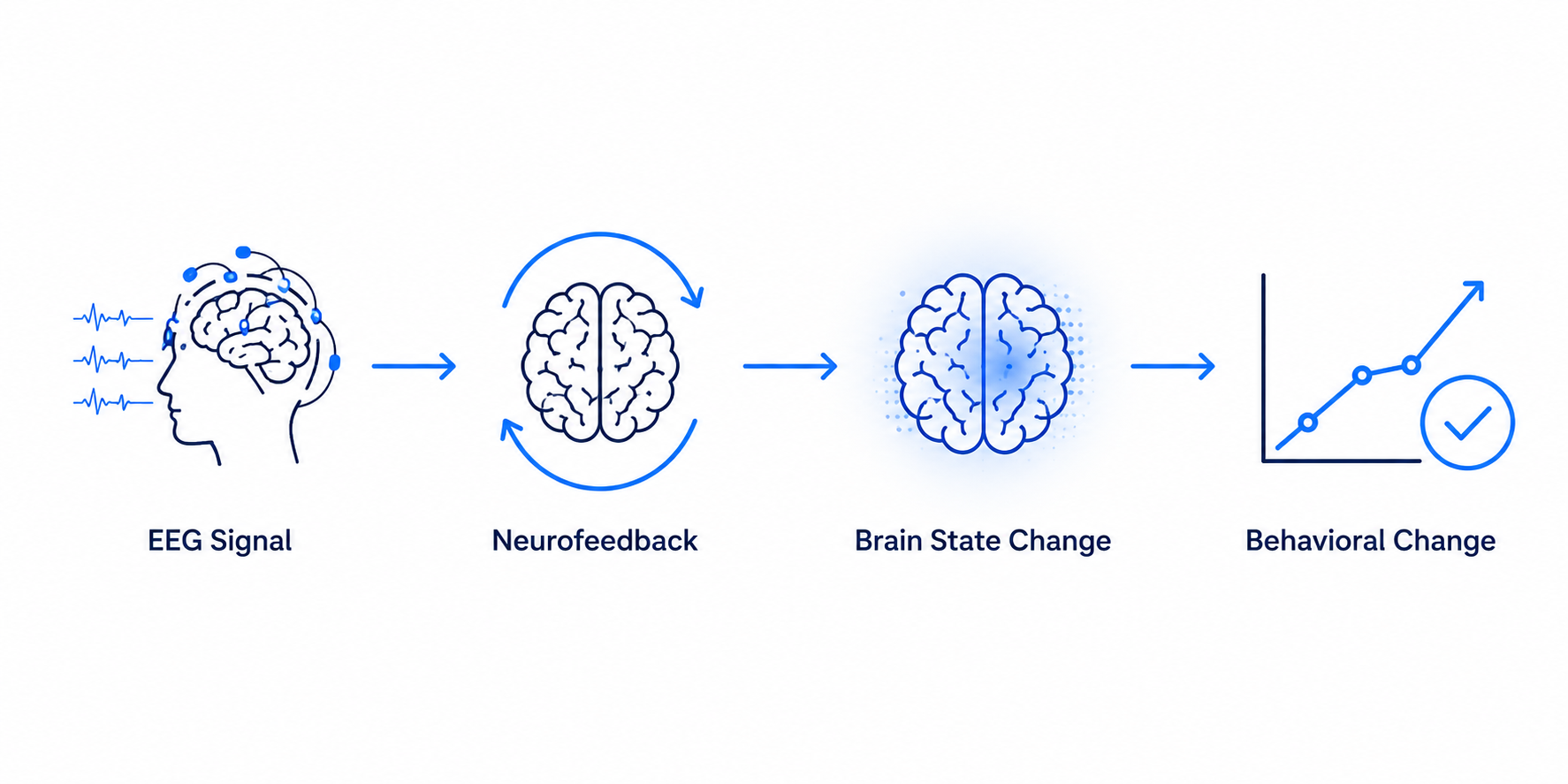
Cognitive Finance Group's core study (IRB Protocol QU-001) tests whether swLORETA neurofeedback training produces measurable improvements in financial decision-making under stress. Participants complete a structured series of neurofeedback sessions alongside behavioral testing on our proprietary measurement platform (BMS), which tracks four core constructs: risk control after loss, rule adherence under pressure, consistency under disruption, and recovery speed — giving a quantitative picture of how trained attention and emotional regulation translate into better financial behavior.
Methodology
Can real-time neurofeedback training change how people make financial decisions under stress? QU-001 is a pre-registered pilot study testing whether 20 sessions of swLORETA neurofeedback measurably improve financial decision-making after a loss — not through better strategy, but through better self-regulation.
The Question We're Testing
How the Study Is Designed
QU-001 is a sham-controlled, randomized pilot enrolling approximately 40 Quinnipiac University students. Half receive active neurofeedback; half receive a sham (placebo) version with identical setup, session length, and clinician interaction — the only difference is whether the feedback signal is driven by their own real-time brain activity. Neither participants nor the person scoring their results know which group they're in until the study ends. This "double-blind" structure is what lets us attribute any change specifically to the neurofeedback itself, not to expectation or attention.
The only difference is whether the feedback signal is driven by real-time brain activity. Neither participants nor the person scoring results know which group they're in until the study ends — so any change can be attributed to the neurofeedback itself, not expectation or attention.
What a Session Actually Looks Like
Getting Set Up
Each session begins with an EEG cap fitted with sensors that read electrical activity across the scalp. A technician checks signal quality at each electrode before starting — this takes about 5-10 minutes and is not uncomfortable.
The Training Itself
Once connected, participants watch a simple visual or auditory display — a shape that grows clearer, a tone that stays steady — driven directly by their real-time brain activity. When their brain moves toward a target state (calm, focused attention rather than a stress response), the feedback improves. When it drifts, the signal fades. No conscious effort is required; it's a passive learning process, similar to how the body learns balance through repeated feedback.
Each session begins with an EEG cap fitted with sensors that read electrical activity across the scalp. A technician checks signal quality at each electrode first — this takes 5-10 minutes and isn't uncomfortable.
Why It's Repeated Over Time
A single session doesn't change behavior — the effect comes from repetition. Over 20 sessions, the brain gradually strengthens the neural pathways associated with staying regulated under pressure, the same way physical training builds strength through repeated, incremental exposure. This is measured directly afterward using the BMS platform, where participants make simulated trading decisions under timed stress conditions — allowing us to compare decision-making before and after the neurofeedback series.
What It Feels Like
Most participants describe the sessions as calm and low-effort — closer to meditating than to studying. Sessions run on-site and are supervised throughout by a trained clinician.
What We Measure: The BMS Platform
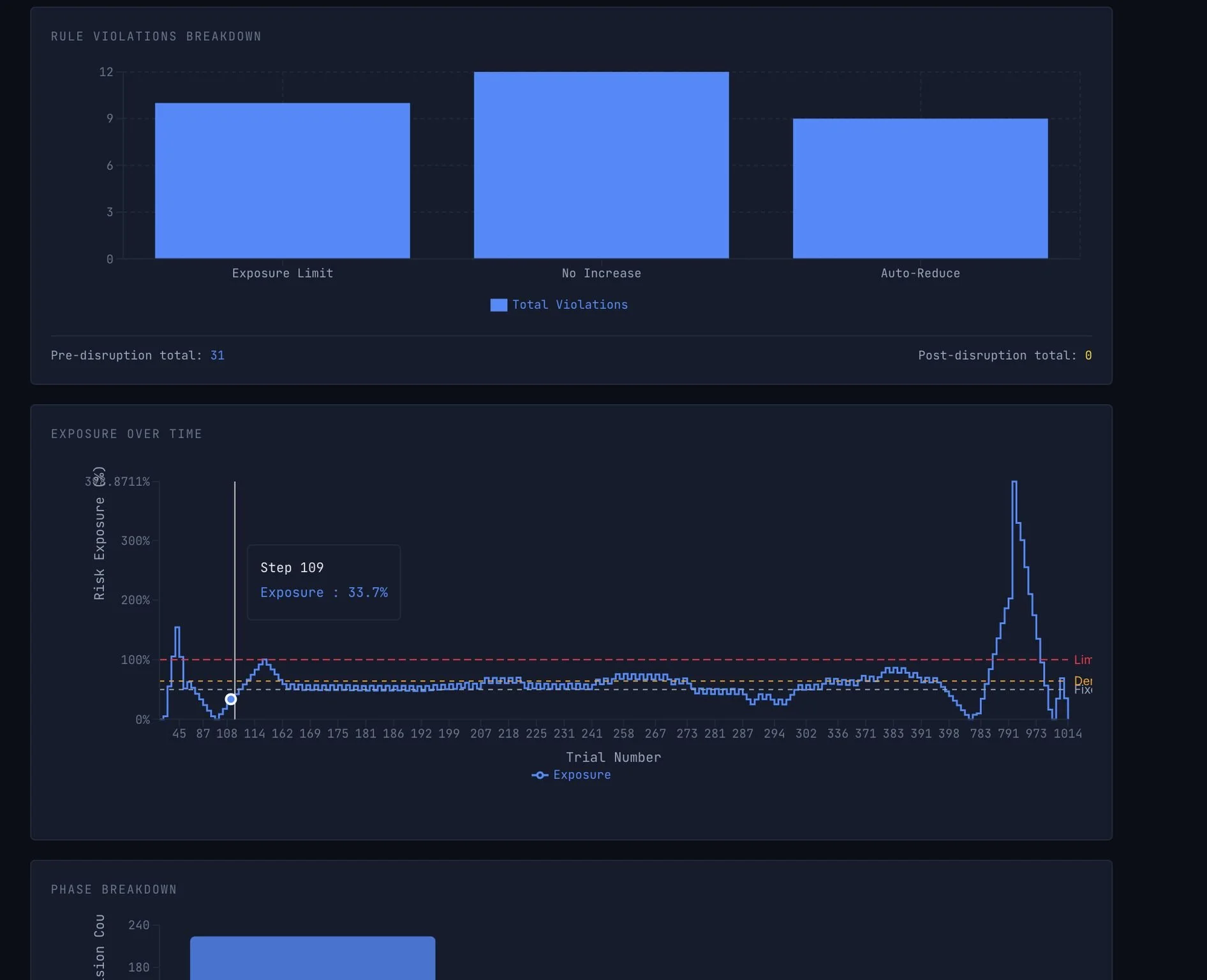
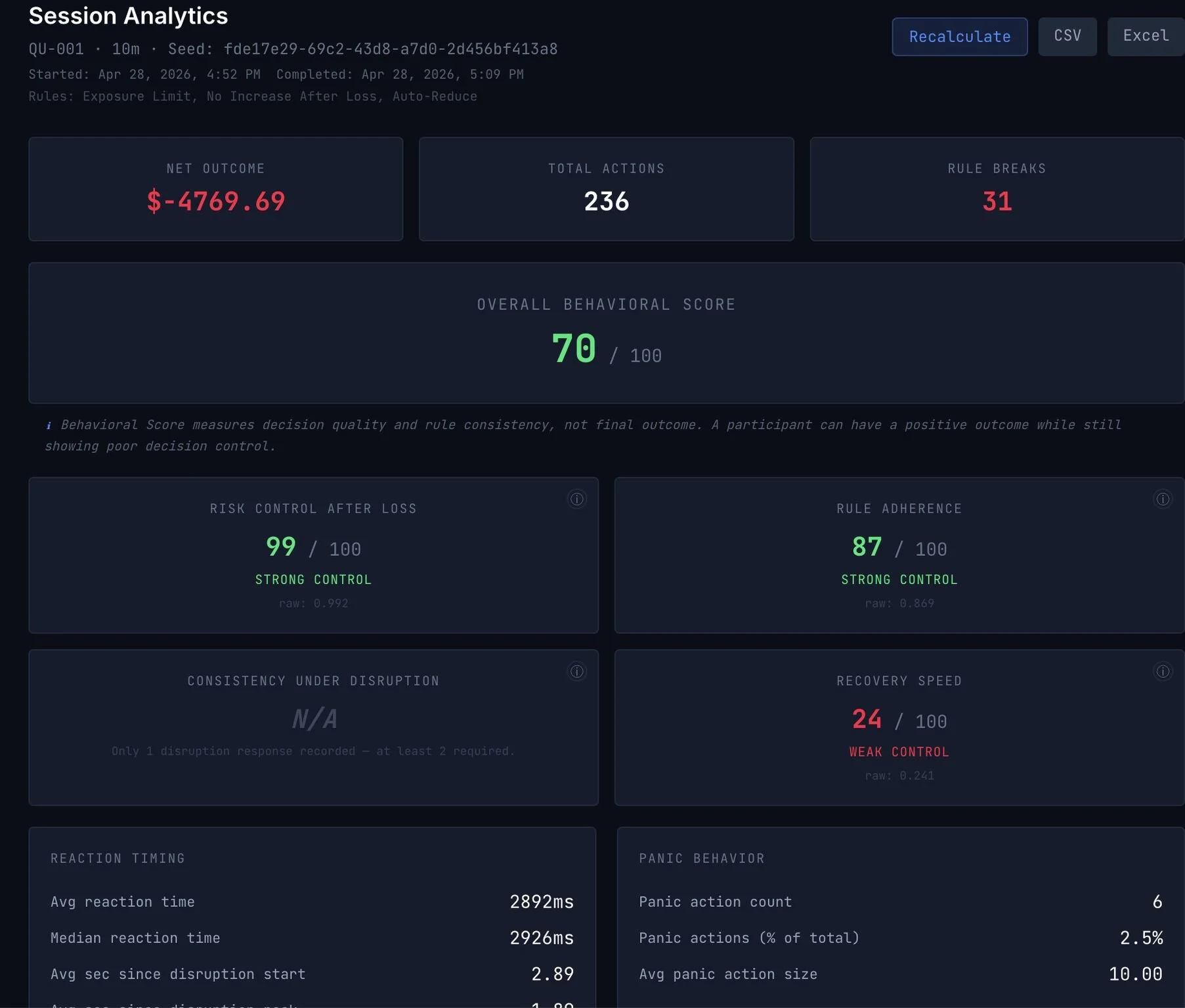
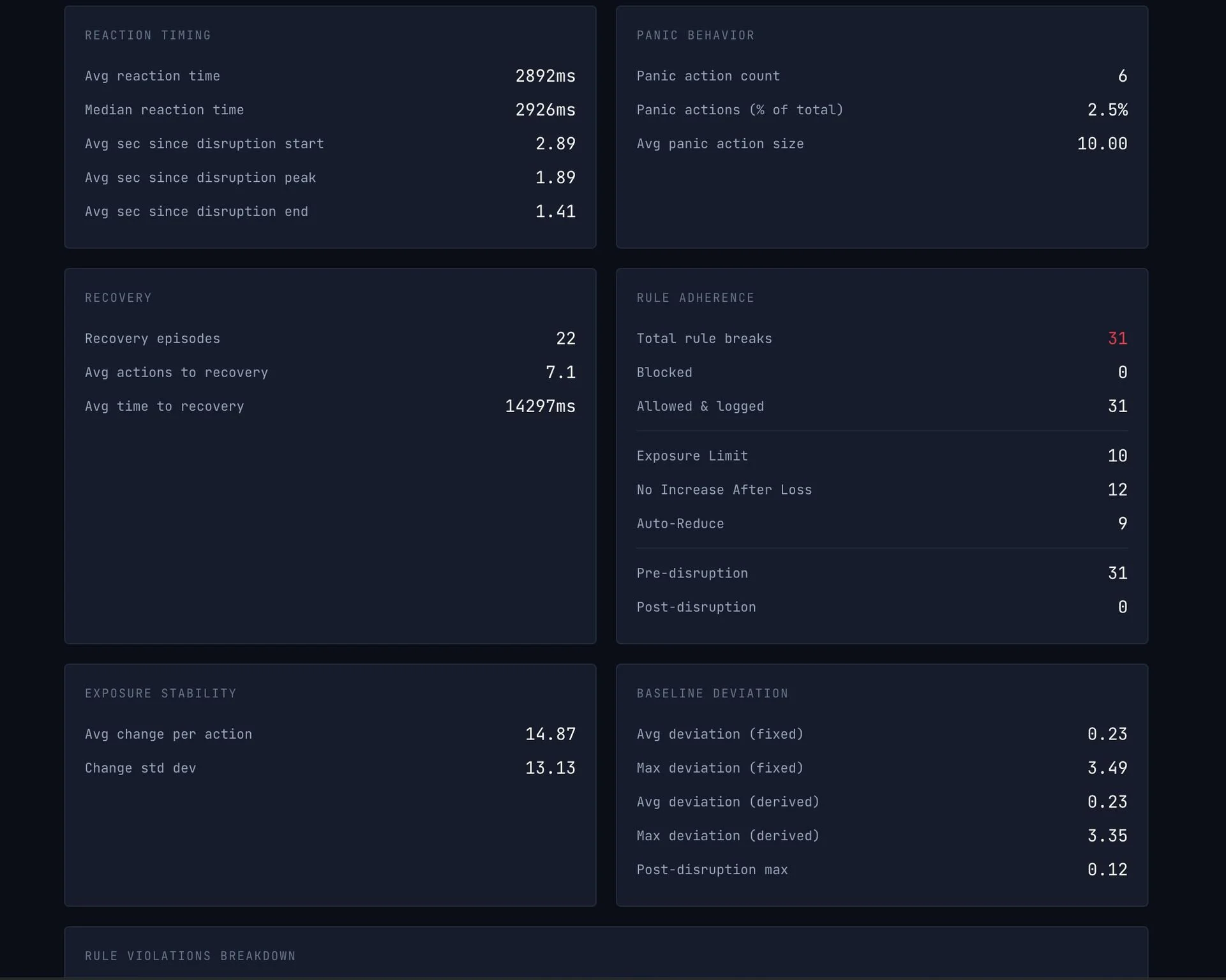
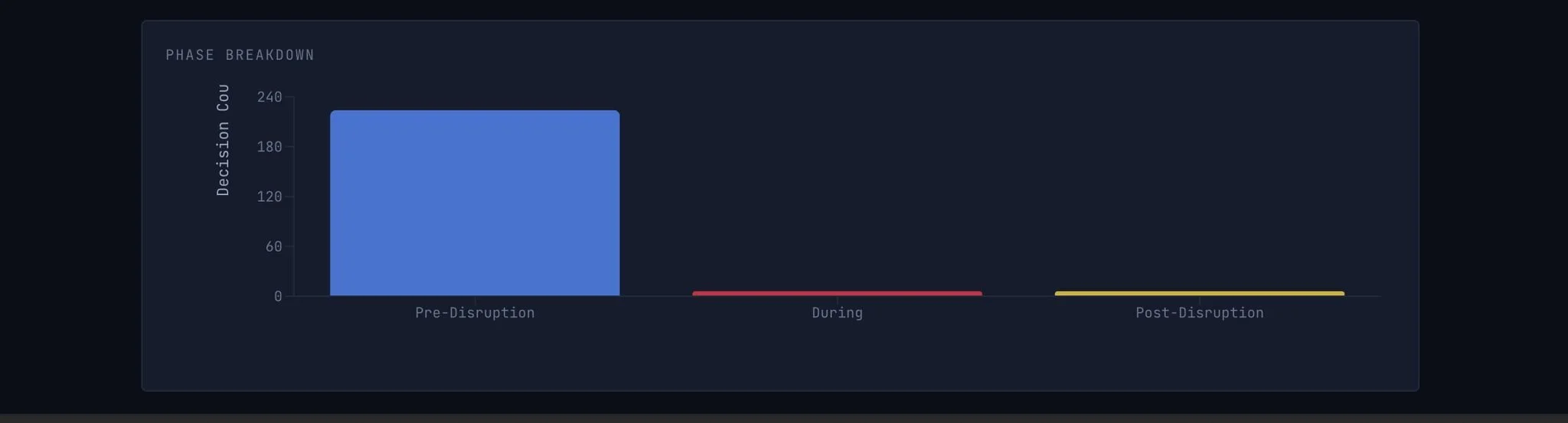
We built a custom research tool — the Behavioral Market Simulation (BMS) — to measure decision-making under pressure. Participants respond to a simulated market environment that includes unexpected disruptions, while the system silently logs every decision. From that, we calculate four scores:
Risk Control After Loss — Does behavior stay steady after a loss, or spiral?
Rule Adherence — Do participants stick to their own stated limits under pressure?
Consistency Under Disruption — How similarly do they respond to repeated shocks?
Recovery Speed — How many decisions does it take to return to baseline behavior after a loss?
Each is scored 0–100. Together, they capture distinct failure modes seen in real trading behavior: panic, rule-breaking, instability, and slow recovery.
Why This Approach
The four constructs draw on established research — Kahneman & Tversky's work on loss aversion and prospect theory, and neuroeconomics linking specific brain regions to risk avoidance. Instead of asking participants to self-report, BMS measures actual behavior in a controlled, repeatable environment.
Validation
Before any participant data is collected, the platform passed 104 automated tests confirming its scoring logic works as intended. Results will also be benchmarked against two established instruments — the Balloon Analogue Risk Task and the N-back working memory test — to confirm BMS measures what it claims to.
Study Status
QU-001 is pre-registered on the Open Science Framework, meaning our hypotheses and analysis plan are locked in before any data is collected — a scientific best practice that prevents cherry-picking results after the fact. The study is currently under IRB review at Quinnipiac University; enrollment has not yet begun.
What Comes Next
QU-001 is Phase 1 of a four-phase research program. Later phases will test real-world trading validity and build toward a larger confirmatory trial.
Interested in QU-001?
QU-001 is a research study testing whether targeted neurofeedback training can measurably improve financial decision-making under stress.
Who it's for: Quinnipiac University students, age 18+, with an interest in trading, investing, or financial decision-making. No prior neurofeedback experience is required.
How to get involved: Enrollment has not yet begun — the study is currently under IRB review. Reach out below to be notified when enrollment opens, or to ask any questions about participating.