
Cognitive Finance Group
Advancing Research at the Intersection of Finance and Cognitive Science
Quinnipiac University · Finance & Economics
IRB Protocol QU-001
15-minute cognitive assessment for Quinnipiac students · Compensation provided
The Problem
Losses aren't the problem. Panic is.
- ✕ Strategy usually isn't what fails
- ✕ Money is lost in the seconds after a loss
- ✕ Panic, tilt, and rule-breaking take over
The Solution
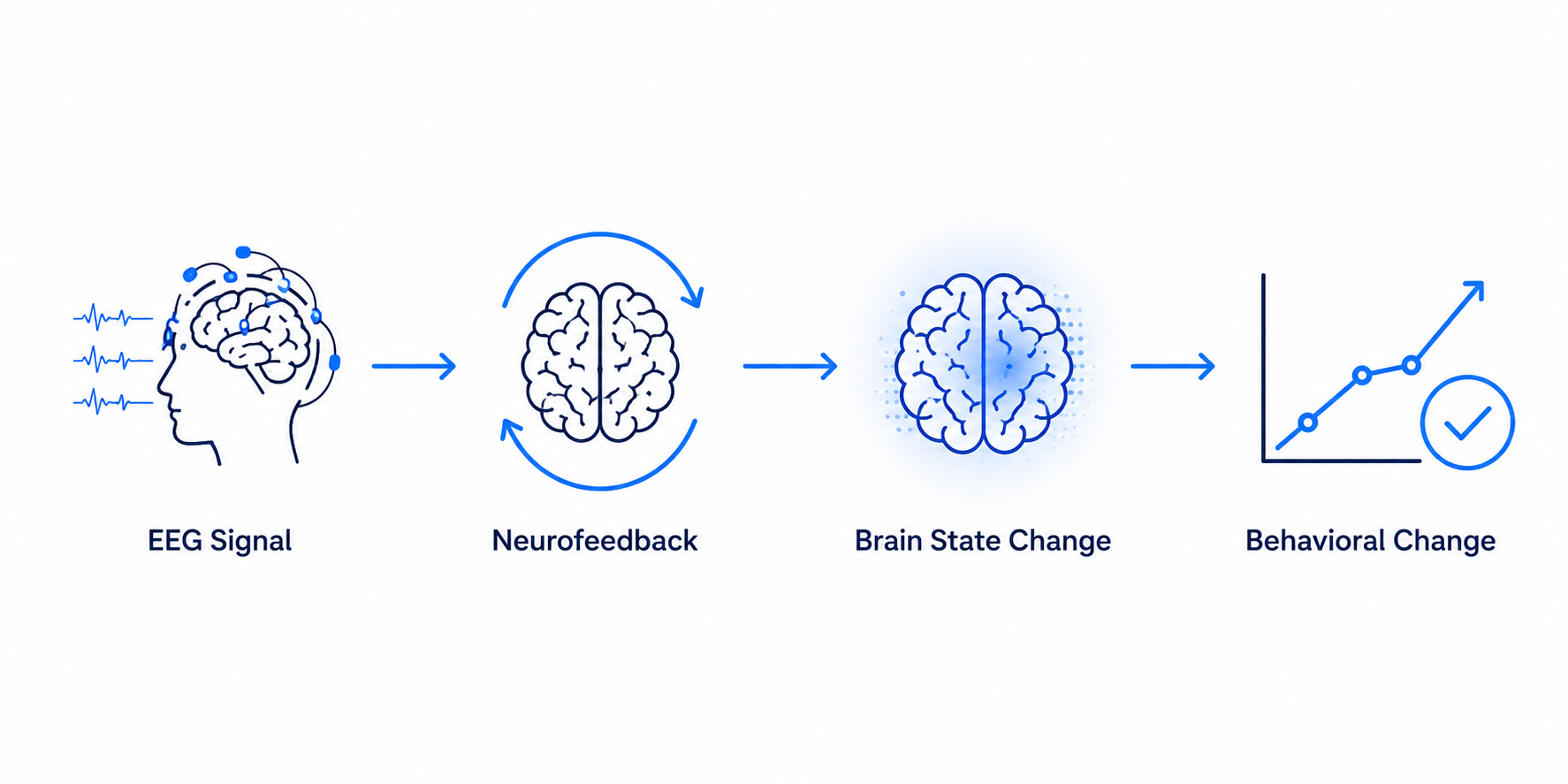
Real-time neurofeedback
- ✓ Trains the brain directly with live EEG feedback
- ✓ Strengthens neural pathways for steady decisions after a loss
- ✓ Not mindfulness. Not an app.
“Losses are neurologically weighted about twice as heavily as equivalent gains.” — Kahneman & Tversky, Prospect Theory
Neurofeedback Training
Participants complete guided swLORETA neurofeedback sessions alongside the BMS task. This training is designed to help individuals build greater self-regulation over the neural patterns linked to decision-making under stress — the same capacity the study measures through financial performance and behavioral scoring.
How do we measure?
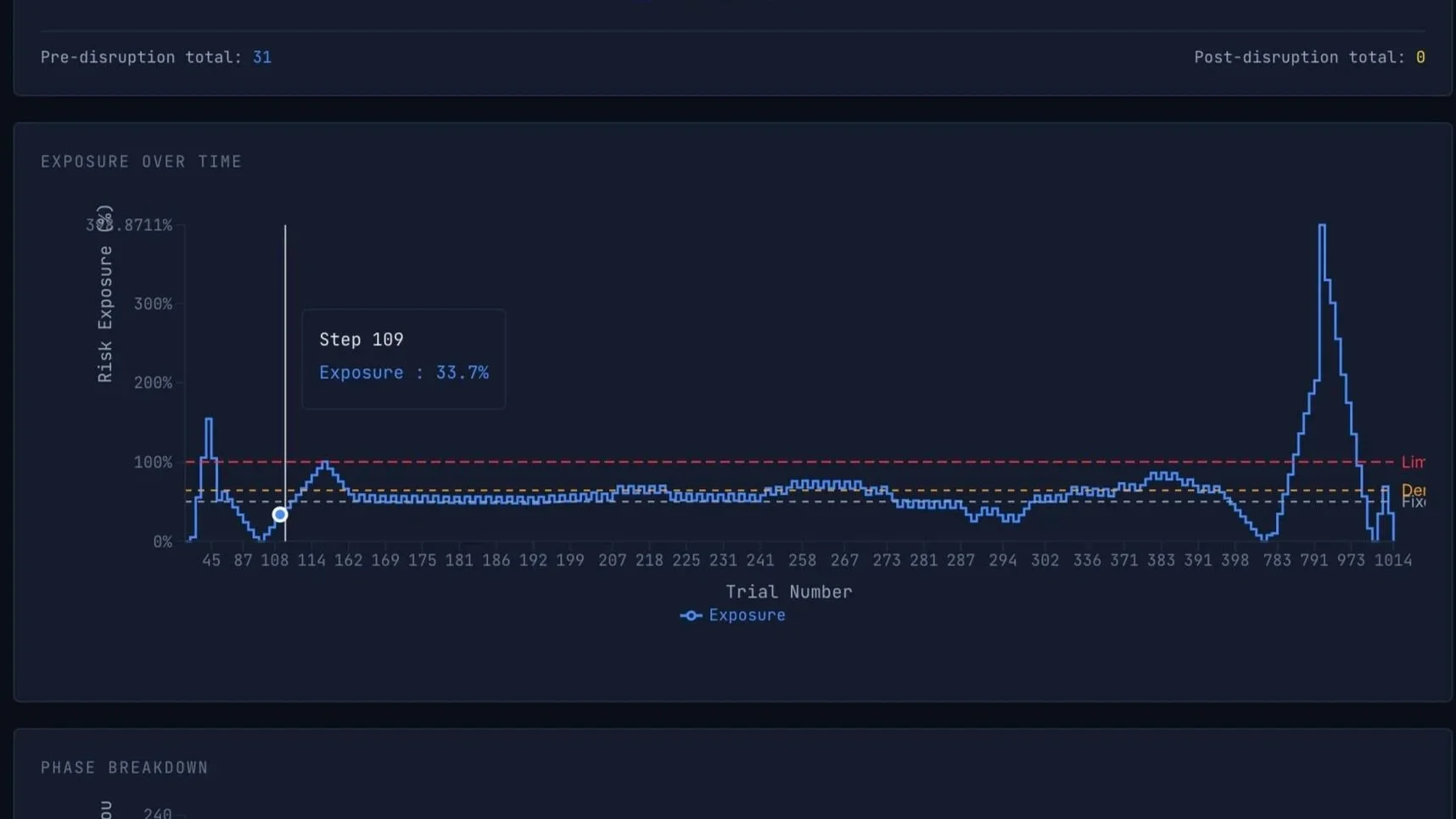
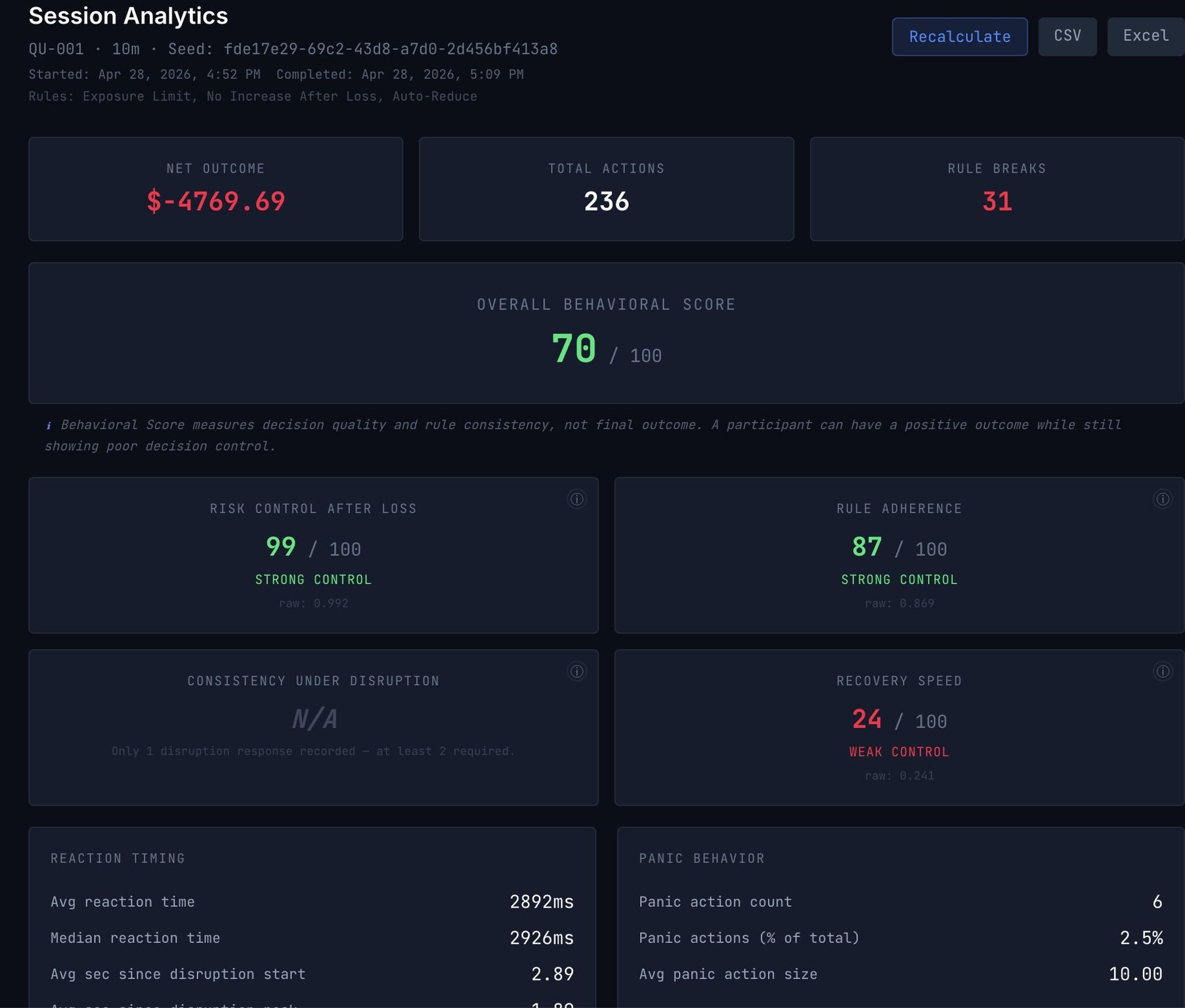
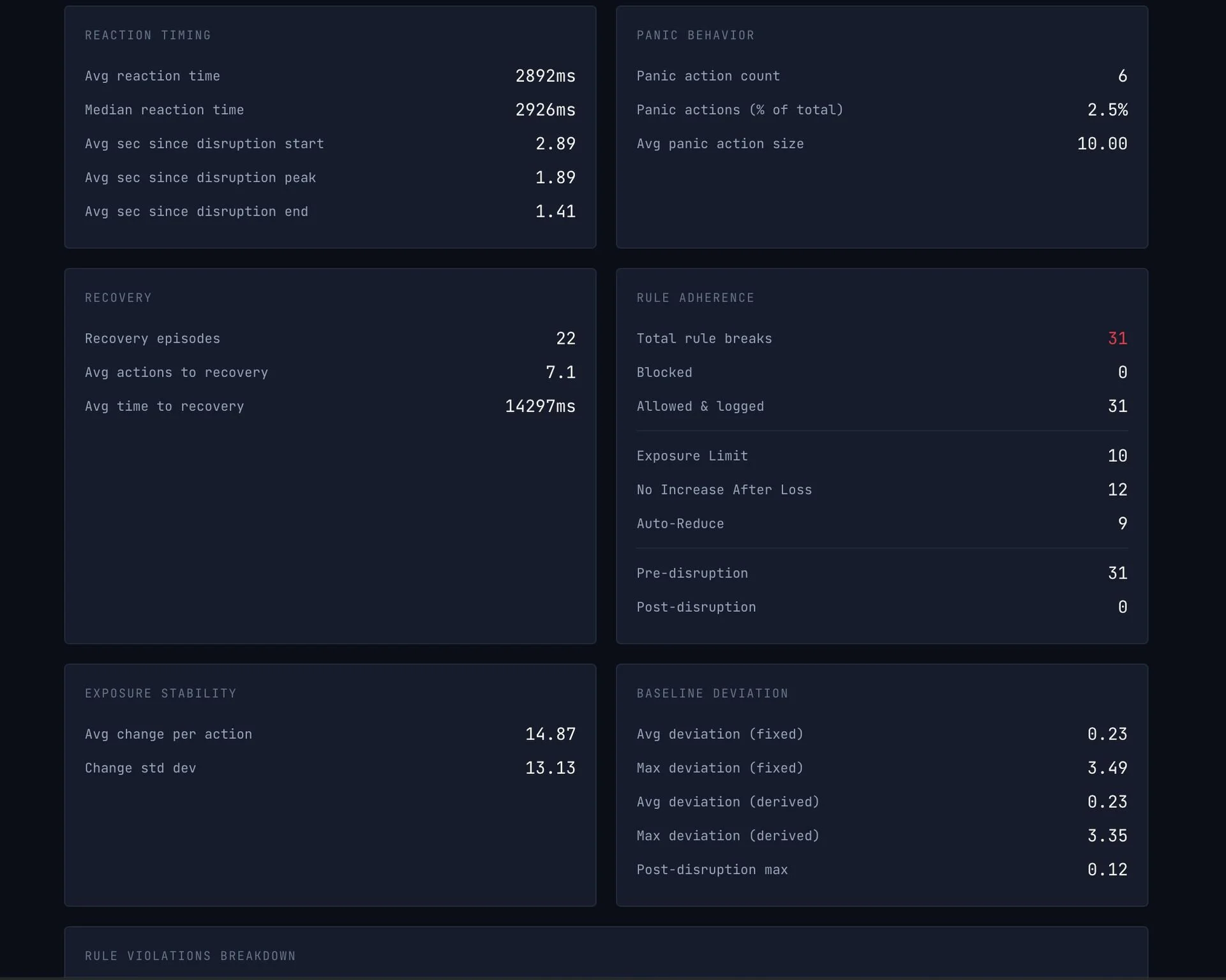
These pictures are from our proprietary BMS system.
Risk exposure over time — tracking rule violations and disruption response
Four-dimension behavioral scoring — risk control, rule adherence, consistency, recovery speed
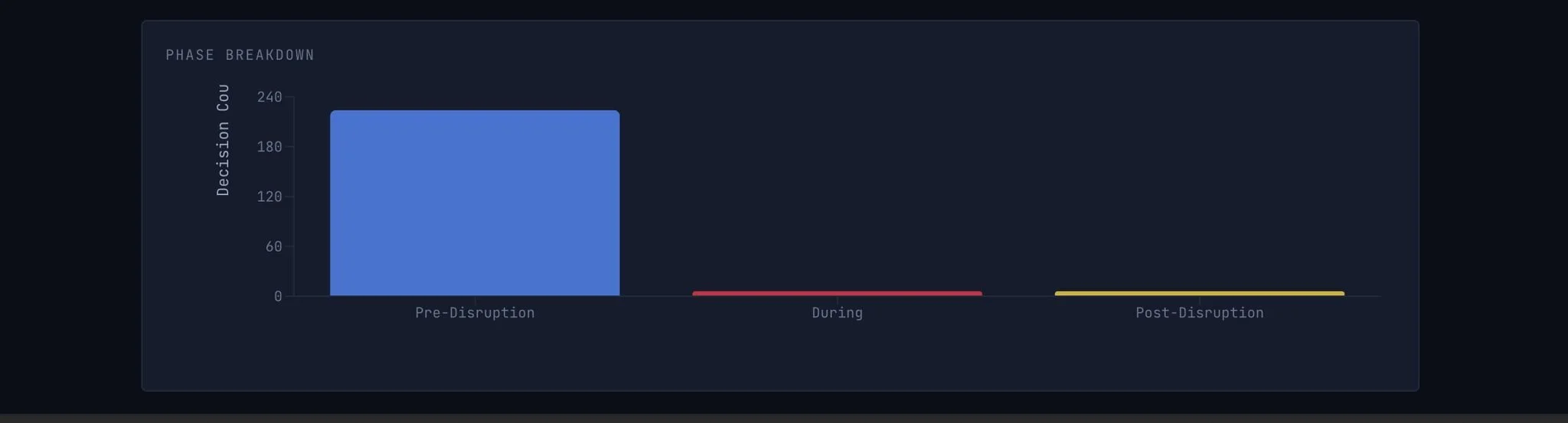
Decision volume across disruption phases
Detailed session metrics — reaction time, recovery, and rule adherence data
How a participant session works
How We Reduce Stress-Driven Trading Losses
Cognitive Finance Group exists to test whether targeted neurofeedback training can measurably improve financial decision-making under stress. We combine EEG-based neurofeedback (swLORETA) with a proprietary behavioral platform that tracks how people regulate risk after losses, follow rules under pressure, and recover from disruption — bringing rigorous cognitive science to a question finance has mostly guessed at.
Why it matters: Traders and investors lose money not from bad strategy, but from panic, tilt, and rule-breaking after a loss. Our research measures whether real-time neurofeedback can train people to stay disciplined under pressure — the same skill elite athletes train for.
Wanting to control emotional decision-making
Evaluating trader discipline and risk control
Interested in applied neurofeedback
A Familiar Pattern
A trader takes a loss. Instead of sticking to their plan, they immediately re-enter at a larger size to "win it back" — or freeze entirely, unable to make a decision for the rest of the session. Neither response is about strategy. Both are about what happens in the brain in the seconds after a loss.
This is the exact behavior our BMS platform is built to measure — and the exact behavior swLORETA neurofeedback training is designed to target.
What Training Is Designed to Change
Instead of a stress response taking over decision-making, the goal of neurofeedback training is to strengthen the brain's ability to stay regulated after a setback — so a loss becomes a data point, not a trigger. In practice, that could mean the difference between:
Before training: A loss leads to an immediate, oversized re-entry driven by frustration.
After training (hypothesized outcome): The same loss is followed by a measured pause, then a decision consistent with the trader's original plan.
QU-001 is designed to test — with real, blinded, controlled data — whether this shift is measurable and attributable specifically to the neurofeedback itself, not to practice effects or placebo. Results from the pilot will be published here once available.
Curious what QU-001 actually tests? See how it works→
Endorsements
“Matthew is a diligent, dedicated, and consistently driven student. He has admirable aspirations to blend his academic experiences with his lived experiences in hopes of providing real practical value to the financial industry."
— David Tomczyk, Associate Professor of Entrepreneurship, Strategy, and Game Design, Quinnipiac University.”
"He was one of the most thoughtful and well-prepared clients I've worked with as a senior engineer... He's the kind of client who makes technical collaborators better at their work."
— Perre (Ebiperre Iyoro), Software Engineer, BMS Platform
Founder & Principal Investigator
Matthew Fehmel didn’t start with a business idea — he started with a question. After years of running his own neurofeedback practice, he wanted to know if the same cognitive training used in clinical and athletic settings could measurably improve financial decision-making under stress. That question became QU-001.
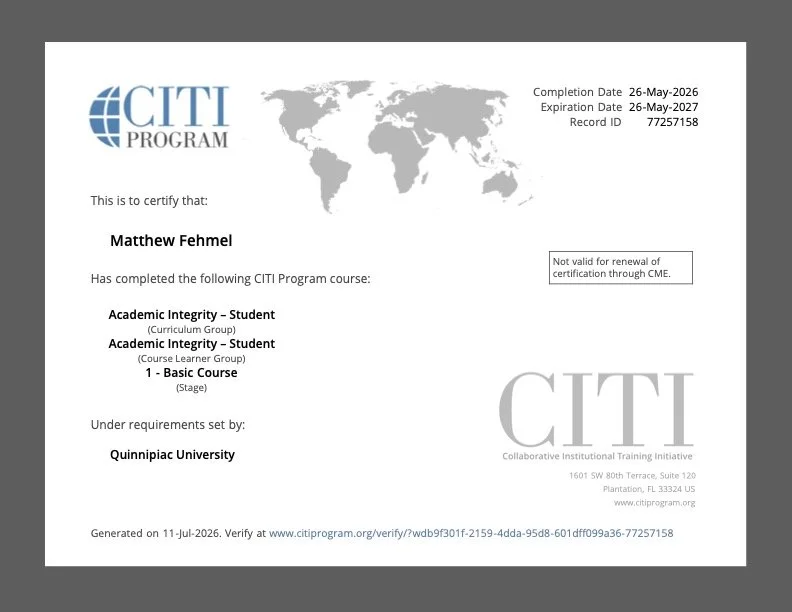
CITI Certification — Academic Integrity
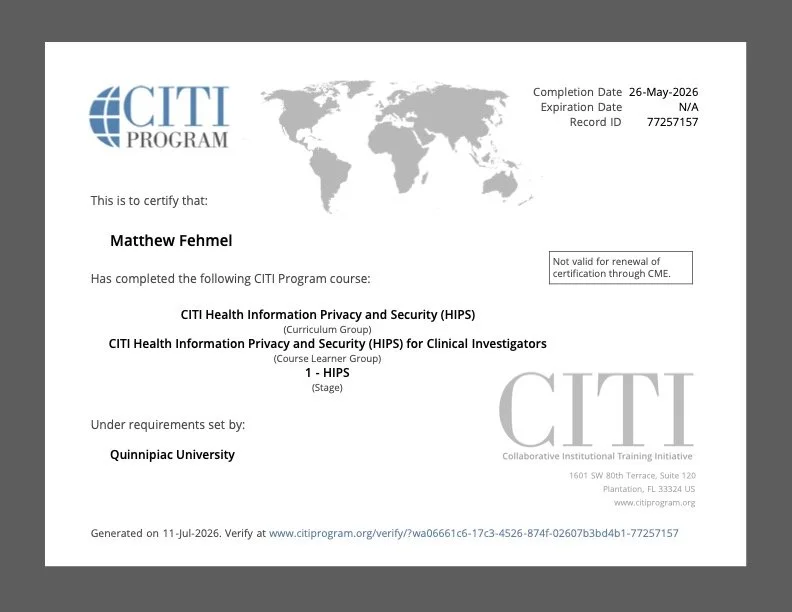
CITI Certification — Health Information Privacy and Security
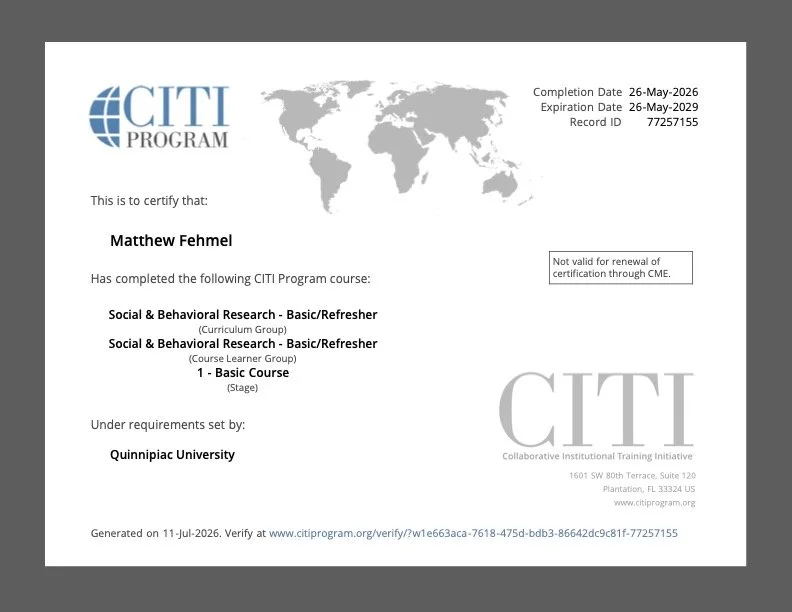
CITI Certification — Social & Behavioral Research (Basic/Refresher)
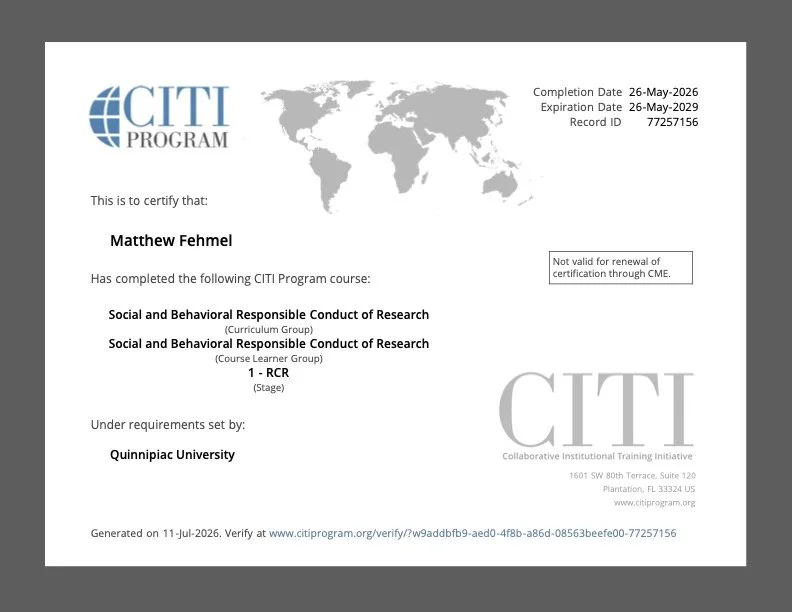
CITI Certification — Social and Behavioral Responsible Conduct of Research
Cognitive Finance Group is built by researchers and engineers working at the intersection of neuroscience and finance.
Interested in QU-001: Can Neurofeedback Stop loss Panic-Driven Trading Losses?
What It Is
QU-001 is a research study testing whether targeted neurofeedback training can measurably improve financial decision-making under stress.
Who It's For
Quinnipiac University students, age 18+, with an interest in trading, investing, or financial decision-making. No prior neurofeedback experience required.
How to Get Involved
Enrollment has not yet begun — the study is currently under IRB review. Reach out below to be notified when enrollment opens, or to ask questions about participating.